Buy fullyfashionednylons.eu ?
We are moving the project
fullyfashionednylons.eu .
Are you interested in purchasing the domain
fullyfashionednylons.eu ?
domain@kv-gmbh.de · 0541-91531010
Buy fullyfashionednylons.eu ?
How can one properly utilize the hidden potential in Dokkan Battle?
To properly utilize the hidden potential in Dokkan Battle, players should focus on unlocking and investing in the potential system for their characters. This system allows players to further enhance their characters' stats and abilities by using orbs obtained from events and missions. By strategically allocating orbs and selecting the most beneficial paths in the potential system, players can maximize their characters' hidden potential and significantly improve their performance in battles. Additionally, players should also aim to awaken and train their characters to unlock their full potential and make the most of their abilities in the game. **
What is the difference between equilibrium potential, resting potential, and membrane potential?
Equilibrium potential is the membrane potential at which the net flow of a particular ion across the membrane is zero. Resting potential is the membrane potential of a cell when it is at rest, typically around -70 millivolts in neurons. Membrane potential refers to the difference in electrical charge between the inside and outside of a cell, which is maintained by the selective permeability of the cell membrane to different ions. In summary, equilibrium potential is the potential at which there is no net flow of ions, resting potential is the potential of a cell at rest, and membrane potential is the overall potential across the cell membrane. **


Similar search terms for Hidden-Potential-The-Science
Top-Angebote
Products related to Hidden-Potential-The-Science:
-
DK The Vegetable Grower's Handbook: Unearth Your Garden's Full Potential by Huw RichardsGet your gardening gloves on, as best-selling author Huw Richards takes you on a green-fingered journey to be an undefeated veg-grower!A recent study suggests 38% of British adults use their gardens to grow herbs and vegetables. But with the ever-growing pressure of balancing family life with a career, a lot of today's green-fingered gardeners simply lack time for vegetable growing.Huw is on a mission to change that!Whatever your horticultural hopes may be, Huw Richards brings you a veg-growing guide that is sure to shape the next generation of green-fingered gardeners like never before, full of top tips on smart gardening, without compromising on time, effort or money.With passion in every page, you can enjoy:-Tons of tips and tricks to maximise efficiency of your vegetable gardens-Skillful and solid information to disparage the common myth that gardening requires too much time and effort-Easy to follow step-by-step instructions of fundamental gardening techniques-Visual representations of Huw's innovative ideas to easily apply to your own vegetable gardenAfter the immeasurable success of his first two gardening books 'Veg in One Bed' and 'Grow Food for Free', Huw brings you a riveting third release, full of simple yet effective strategies to leave you with a patch to be proud of!By applying a strategic approach to your veggie patch, from choosing the right compost to using the correct cultivation tools, Huw assures that even the most hapless of gardeners can unearth the endless potential that all gardens possess, no matter the shape or size!Why not stand out from the crowd with this fully-illustrated veggie handbook, and start your intuitive gardening journey today to reap the benefits of a more bountiful harvest.An ideal gift for the green-fingered gardener or budding botanist in your life!With over 500,000 subscribers on YouTube, Huw Richards is keen to share his 17 years' experience on maximising productivity of vegetable patches, so get those gloves on, and join the journey today!Ready, set, let's grow!9,45 £*Shipping: 2,99 £Secure redirect to the provider




-
What is the resting potential and the membrane potential?
The resting potential is the electrical potential difference across the membrane of a neuron when it is not being stimulated. It is typically around -70 millivolts and is maintained by the unequal distribution of ions across the membrane. The membrane potential refers to the difference in electrical charge between the inside and outside of the cell membrane, which is essential for the transmission of signals in neurons. **
-
How is the resting potential and membrane potential created?
The resting potential is created by the unequal distribution of ions across the cell membrane. This is maintained by the sodium-potassium pump, which actively transports sodium ions out of the cell and potassium ions into the cell. The membrane potential is created by the separation of charges across the cell membrane, with the inside of the cell being more negatively charged compared to the outside. This is due to the presence of negatively charged proteins inside the cell and the movement of ions across the membrane. **
-
What is the difference between potential and potential difference?
Potential refers to the amount of stored energy in an object due to its position or state, while potential difference is the difference in potential energy between two points in a system. In other words, potential is a scalar quantity that represents the energy at a single point, while potential difference is a vector quantity that represents the change in energy between two points. Potential is measured in joules, while potential difference is measured in volts. **
-
How is the resting potential and the membrane potential formed?
The resting potential is the electrical potential difference across the membrane of a neuron when it is not being stimulated. This potential is formed by the unequal distribution of ions across the membrane, with more sodium ions outside the cell and more potassium ions inside the cell. The membrane potential is formed by the movement of these ions through ion channels in the membrane, which are selectively permeable to specific ions. The resting potential is maintained by the sodium-potassium pump, which actively transports sodium out of the cell and potassium into the cell, helping to maintain the concentration gradients of these ions. **

What is the difference between resting potential and membrane potential?
Resting potential refers to the membrane potential of a neuron when it is not being stimulated or sending signals. It is typically around -70 millivolts and represents the baseline electrical charge of the neuron. Membrane potential, on the other hand, refers to the difference in electrical charge between the inside and outside of a neuron's cell membrane at any given moment, including both resting and active states. In summary, resting potential is a specific type of membrane potential that represents the neuron's baseline electrical state when not actively transmitting signals. **
What is the difference between action potential and resting potential?
Resting potential is the electrical charge across the cell membrane of a neuron when it is not sending signals. It is typically around -70 millivolts. Action potential, on the other hand, is a brief electrical impulse that travels down the axon of a neuron when it is stimulated. It is a rapid change in the membrane potential from negative to positive, and it is the basis for neural communication. In summary, resting potential is the baseline electrical charge of a neuron, while action potential is the transient change in electrical charge that allows for communication between neurons. **
Top-Angebote
Products related to Hidden-Potential-The-Science:
-
Hidden Potential: The Science of Achieving Greater Things by Adam Grant (HB)Description. #1 New York Times bestseller. "This brilliant book will shatter your assumptions about what it takes to improve and succeed. I wish I could go back in time and gift it to my younger self. It would've helped me find a more joyful path to progress.". -Serena Williams, 23-time Grand Slam singles tennis champion. The #1 New York Times bestselling author of Think Again illuminates how we can elevate ourselves and others to unexpected heights.. We live in a world that’s obsessed with talent. We celebrate gifted students in school, natural athletes in sports, and child prodigies in music. But admiring people who start out with innate advantages leads us to overlook the distances we ourselves can travel. We can all improve at improving. And when opportunity doesn’t knock, there are ways to build a door.. Title. Hidden Potential: The Science of Achieving Greater Things by Adam Grant. Delivery. Content. Reviews20,00 £*Shipping: 2,99 £Secure redirect to the provider
-
Think Again, Originals, Give and Take & Hidden Potential 4 Books Collection Set by Adam Grant - Non Fiction - PaperbackTitles in This Set:. Originals. Give and Take. Think Again. Hidden Potential Condition: BRAND NEW. Format: Paperback Overview:. This four-book collection brings together the most influential, evidence-based works from Adam Grant, one of the world’s leading figures in organizational psychology. In Originals, he reveals how non-conformists drive progress and how leaders can cultivate a culture that welcomes bold ideas. Give and Take challenges conventional wisdom about success, showing that generous collaboration can outperform cutthroat competition. Think Again invites readers to question assumptions, embrace doubt, and rethink what they think they know in a fast-changing world. Hidden Potential offers a science-grounded pathway to raise aspirations, develop core character skills, and unlock achievements that may have seemed out of reach. This carefully curated paperback set is ideal for professionals, students, managers, and curious readers who want practical strategies backed by research to transform thinking, collaboration, and outcomes—delivered in four interconnected volumes that reinforce a powerful growth mindset. What Makes This Collection Special:. Across Originals, Give and Take, Think Again, and Hidden Potential, Adam Grant threads a cohesive narrative about progress—from individual creativity to collective performance. Readers gain a complementary toolkit: spark original ideas, build a generous network, invite constructive dissent, and design systems that foster ongoing development. The set offers a satisfying reading arc: first challenge the status quo, then learn how to collaborate effectively, then cultivate the reflex to rethink, and finally apply science-based methods to raise personal and organizational potential. It’s a complete mindset upgrade in one value-packed collection, perfect for gifting, education, corporate training, or any reader who wants to turn insight into impact. Books Included in This Collection:. Originals. Originals explores how individuals can champion ideas that defy conventions while navigating risk and resistance. Drawing from real-world cases across business, politics, sports, and culture, Grant reveals practical strategies to recognize worthwhile originality, recruit allies, time bold moves, and cultivate environments where dissent is not just tolerated but celebrated. It’s essential for leaders who want fresh thinking without sacrificing ethics, for students planning careers in innovation, and for anyone who refuses to settle for the status quo. Give and Take. In Give and Take, Grant reframes success around social dynamics: givers, takers, and matchers. The book blends rigorous research with memorable anecdotes—from late-night startups to boardrooms—demonstrating how generosity can yield extraordinary professional returns when paired with boundaries and strategic reciprocity. Readers learn how to avoid being overwhelmed by giving, how to leverage networks for mutual benefit, and how to foster cultures...99,99 £*Shipping: 0,00 £Secure redirect to the provider
-
DK The Vegetable Grower's Handbook: Unearth Your Garden's Full Potential by Huw RichardsGet your gardening gloves on, as best-selling author Huw Richards takes you on a green-fingered journey to be an undefeated veg-grower!A recent study suggests 38% of British adults use their gardens to grow herbs and vegetables. But with the ever-growing pressure of balancing family life with a career, a lot of today's green-fingered gardeners simply lack time for vegetable growing.Huw is on a mission to change that!Whatever your horticultural hopes may be, Huw Richards brings you a veg-growing guide that is sure to shape the next generation of green-fingered gardeners like never before, full of top tips on smart gardening, without compromising on time, effort or money.With passion in every page, you can enjoy:-Tons of tips and tricks to maximise efficiency of your vegetable gardens-Skillful and solid information to disparage the common myth that gardening requires too much time and effort-Easy to follow step-by-step instructions of fundamental gardening techniques-Visual representations of Huw's innovative ideas to easily apply to your own vegetable gardenAfter the immeasurable success of his first two gardening books 'Veg in One Bed' and 'Grow Food for Free', Huw brings you a riveting third release, full of simple yet effective strategies to leave you with a patch to be proud of!By applying a strategic approach to your veggie patch, from choosing the right compost to using the correct cultivation tools, Huw assures that even the most hapless of gardeners can unearth the endless potential that all gardens possess, no matter the shape or size!Why not stand out from the crowd with this fully-illustrated veggie handbook, and start your intuitive gardening journey today to reap the benefits of a more bountiful harvest.An ideal gift for the green-fingered gardener or budding botanist in your life!With over 500,000 subscribers on YouTube, Huw Richards is keen to share his 17 years' experience on maximising productivity of vegetable patches, so get those gloves on, and join the journey today!Ready, set, let's grow!9,45 £*Shipping: 2,99 £Secure redirect to the provider
-
How can one properly utilize the hidden potential in Dokkan Battle?
To properly utilize the hidden potential in Dokkan Battle, players should focus on unlocking and investing in the potential system for their characters. This system allows players to further enhance their characters' stats and abilities by using orbs obtained from events and missions. By strategically allocating orbs and selecting the most beneficial paths in the potential system, players can maximize their characters' hidden potential and significantly improve their performance in battles. Additionally, players should also aim to awaken and train their characters to unlock their full potential and make the most of their abilities in the game. **
-
What is the difference between equilibrium potential, resting potential, and membrane potential?
Equilibrium potential is the membrane potential at which the net flow of a particular ion across the membrane is zero. Resting potential is the membrane potential of a cell when it is at rest, typically around -70 millivolts in neurons. Membrane potential refers to the difference in electrical charge between the inside and outside of a cell, which is maintained by the selective permeability of the cell membrane to different ions. In summary, equilibrium potential is the potential at which there is no net flow of ions, resting potential is the potential of a cell at rest, and membrane potential is the overall potential across the cell membrane. **
-
What is the resting potential and the membrane potential?
The resting potential is the electrical potential difference across the membrane of a neuron when it is not being stimulated. It is typically around -70 millivolts and is maintained by the unequal distribution of ions across the membrane. The membrane potential refers to the difference in electrical charge between the inside and outside of the cell membrane, which is essential for the transmission of signals in neurons. **
-
How is the resting potential and membrane potential created?
The resting potential is created by the unequal distribution of ions across the cell membrane. This is maintained by the sodium-potassium pump, which actively transports sodium ions out of the cell and potassium ions into the cell. The membrane potential is created by the separation of charges across the cell membrane, with the inside of the cell being more negatively charged compared to the outside. This is due to the presence of negatively charged proteins inside the cell and the movement of ions across the membrane. **
Similar search terms for Hidden-Potential-The-Science
-
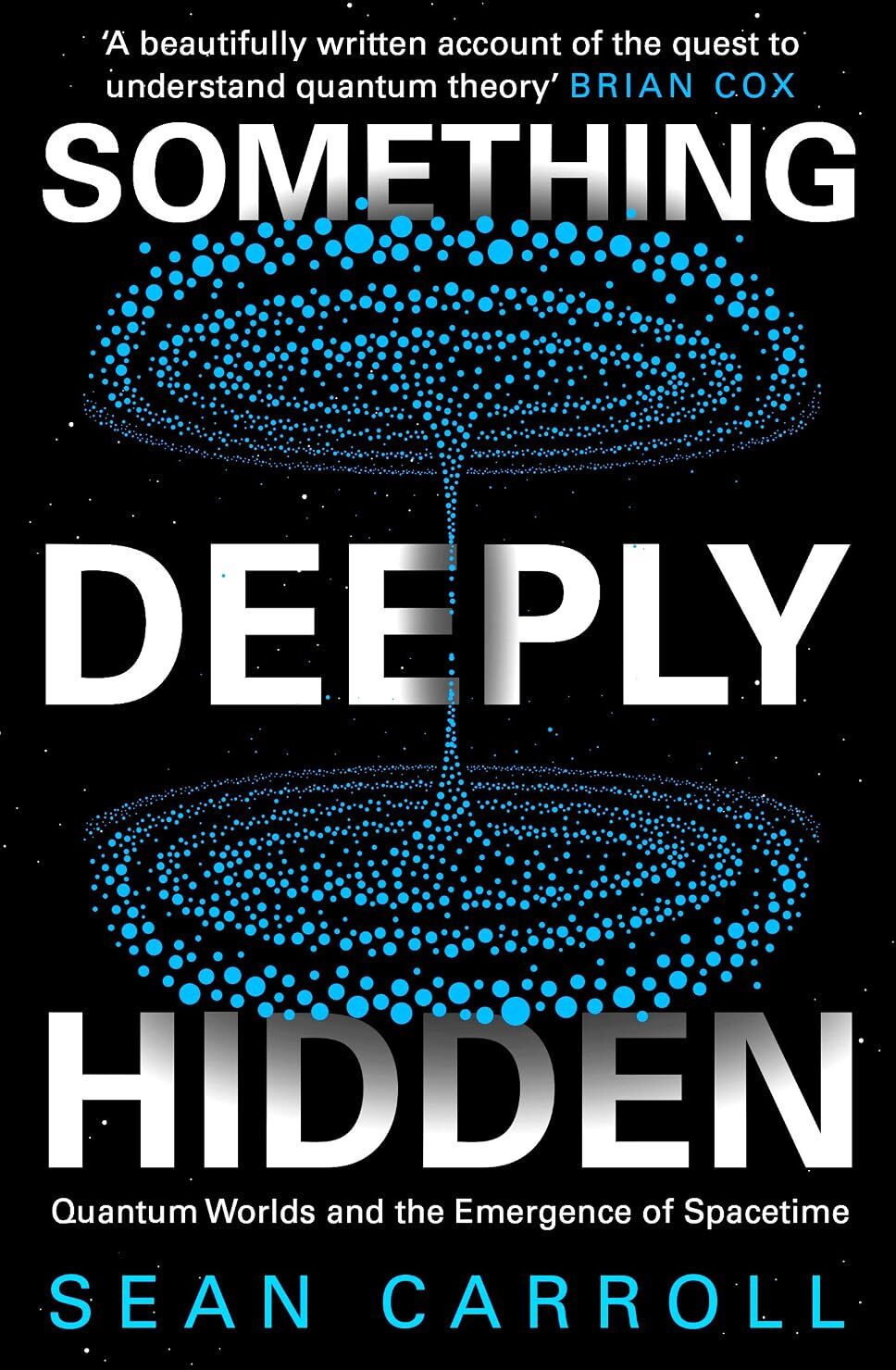
Oneworld Publications Something Deeply Hidden by Sean Carroll - Quantum Worlds and the Emergence of Spacetime - New Paperback - Popular Science Physics BookSomething Deeply Hidden is a landmark exploration of quantum mechanics by theoretical physicist Sean Carroll. This non-fiction paperback delves into the nature of reality, tackling the strangest ideas in modern physics with clarity and wit. Carroll argues that the core ideas of quantum physics are not impossibly confusing, but rather mind-bending in their implications. He traces the history of quantum discovery from Einstein and Niels Bohr through to today's leading physicists, untangling decades of myth and misconception. Written for curious general readers, this book offers a unique perspective on space, time, and existence.5,49 £*Shipping: 2,99 £Secure redirect to the provider
-
Ivy Press Running Science - Revealing The Science Of Peak Performance - Non FictionTitle:. Running Science: Revealing the Science of Peak Performance Overview:. Understanding how to run faster, longer, and without recurring niggles has always separated motivated athletes from true performers. This comprehensive guide distils complex exercise physiology, biomechanical analysis, and contemporary training methodology into a single, highly usable resource. Whether you are targeting a personal best in the half marathon, preparing for ultra-distance challenges, or simply trying to maximise your cardiovascular potential, the principles inside offer a clear roadmap. The text systematically breaks down the human locomotor system, explaining how muscle fibre recruitment, gait kinetics, and metabolic conditioning interact to produce efficient forward propulsion. Readers are guided through evidence-based periodisation models, strategic mileage accumulation, and targeted strength protocols designed to prevent tissue overload. Beyond the physiological mechanics, the volume explores nutritional timing, glycogen management, and circadian-aligned recovery techniques that accelerate adaptation. By moving beyond anecdotal advice and outdated training dogma, the book delivers a structured framework that helps athletes interpret their own physical feedback, adjust workload intelligently, and implement progressive overload without risking systemic fatigue or long-term wear. What Makes This Book Stand Out:. Most running manuals rely heavily on veteran intuition or fragmented study notes, leaving ambitious road and trail runners to piece together conflicting advice. This title operates differently by anchoring every recommendation directly to peer-reviewed sports science research. You will find clear distinctions between aerobic base development and threshold conditioning, alongside precise guidance on how to manipulate intensity zones for optimal mitochondrial density and stroke volume improvement. The narrative actively dismantles persistent myths about rigid cadence mandates, premature barefoot transitions, and aggressive static stretching routines that often cause more harm than benefit. Instead, it introduces dynamic movement assessments, functional mobility screening, and load management protocols that adapt to individual skeletal structures. Each chapter connects theoretical data to track sessions, race simulations, and everyday training environments. The result is a practical operating manual that transforms abstract numbers into actionable adjustments, allowing runners to optimise their stride mechanics, fine-tune pacing strategies, and build sustainable endurance capacity without relying on guesswork. Who This Book Is Perfect For:. This publication is expressly tailored for dedicated distance runners who want to understand the mechanical and biological drivers behind their performances. Recreational marathoners completing their first major events, competitive club athletes chasing podium placements, and experienced trail participants...20,00 £*Shipping: 2,99 £Secure redirect to the provider
-
What is the difference between potential and potential difference?
Potential refers to the amount of stored energy in an object due to its position or state, while potential difference is the difference in potential energy between two points in a system. In other words, potential is a scalar quantity that represents the energy at a single point, while potential difference is a vector quantity that represents the change in energy between two points. Potential is measured in joules, while potential difference is measured in volts. **
-
How is the resting potential and the membrane potential formed?
The resting potential is the electrical potential difference across the membrane of a neuron when it is not being stimulated. This potential is formed by the unequal distribution of ions across the membrane, with more sodium ions outside the cell and more potassium ions inside the cell. The membrane potential is formed by the movement of these ions through ion channels in the membrane, which are selectively permeable to specific ions. The resting potential is maintained by the sodium-potassium pump, which actively transports sodium out of the cell and potassium into the cell, helping to maintain the concentration gradients of these ions. **
-
What is the difference between resting potential and membrane potential?
Resting potential refers to the membrane potential of a neuron when it is not being stimulated or sending signals. It is typically around -70 millivolts and represents the baseline electrical charge of the neuron. Membrane potential, on the other hand, refers to the difference in electrical charge between the inside and outside of a neuron's cell membrane at any given moment, including both resting and active states. In summary, resting potential is a specific type of membrane potential that represents the neuron's baseline electrical state when not actively transmitting signals. **
-
What is the difference between action potential and resting potential?
Resting potential is the electrical charge across the cell membrane of a neuron when it is not sending signals. It is typically around -70 millivolts. Action potential, on the other hand, is a brief electrical impulse that travels down the axon of a neuron when it is stimulated. It is a rapid change in the membrane potential from negative to positive, and it is the basis for neural communication. In summary, resting potential is the baseline electrical charge of a neuron, while action potential is the transient change in electrical charge that allows for communication between neurons. **
* All prices are inclusive of VAT and, if applicable, plus shipping costs. The offer information is based on the details provided by the respective shop and is updated through automated processes. Real-time updates do not occur, so deviations can occur in individual cases. ** Note: Parts of this content were created by AI.