Buy fullyfashionednylons.eu ?
We are moving the project
fullyfashionednylons.eu .
Are you interested in purchasing the domain
fullyfashionednylons.eu ?
domain@kv-gmbh.de · 0541-91531010
Buy fullyfashionednylons.eu ?
What is the difference between a power take-off shaft and a drive shaft?
A power take-off (PTO) shaft is a type of drive shaft that transfers power from a vehicle's engine to an attachment or implement, such as a pump or generator. The main difference between a PTO shaft and a regular drive shaft is that a PTO shaft is specifically designed to transfer power to external equipment, while a drive shaft is typically used to transfer power within a vehicle's transmission or between different components of a vehicle. Additionally, PTO shafts are often detachable and can be connected and disconnected as needed, whereas a drive shaft is a permanent component of a vehicle's drivetrain. **
Why are there no simple motorcycles with shaft drive or belt drive?
There are no simple motorcycles with shaft drive or belt drive because these systems are more complex and expensive to manufacture compared to chain drive systems. Chain drives are simpler, lighter, and more cost-effective, making them the preferred choice for most motorcycles. Additionally, chain drives offer easier maintenance and customization options, which are important factors for many motorcycle enthusiasts. Overall, the simplicity and efficiency of chain drives make them the more popular choice in the motorcycle industry. **


Similar search terms for MAXGEAR-49-1867-Drive-shaft
Top-Angebote
Products related to MAXGEAR-49-1867-Drive-shaft:
-
MAXGEAR 49-0842 Drive shaftFitting Position: Front Axle Left; External Toothing differential side: 22; External Toothing wheel side: 33; Length [mm]: 589; Length 2 [mm]: 58; Transmission-sided joint diameter [mm]: 84; Wheel-sided joint diameter [mm]: 79; Braking/Driving Dynamics: for vehicles without ABS; Manufacturer Restriction: IDENTSY; Vehicle Equipment: for vehicles with a natural gas engine (CNG)77,99 £*Shipping: 8,45 £Secure redirect to the provider
-
MAXGEAR 49-0861 Drive shaftFitting Position: Front Axle; Fitting Position: Front Axle Right; External Toothing differential side: 27; External Toothing wheel side: 30; Length [mm]: 973; Diameter 1 [mm]: 98, 98,1; Diameter 2 [mm]: 86; Construction Year from: 05/2000, 05/2001, 02/2002, 12/2003; Construction Year to: 09/2006166,99 £*Shipping: 1,99 £Secure redirect to the provider
-
MAXGEAR 49-0869 Drive shaftFitting Position: Front Axle Left; External Toothing wheel side: 33; Internal Toothing wheel side: 30; Length [mm]: 596; Number of Teeth, ABS ring: 45; Paired product: 49-0506, 100 498 0671; Engine Code: 1Z, AFN, AGZ, AJM, AFF; Transmission Code: MT; Vehicle Identification Number (VIN) from: 3B-V-000001; Transmission Type: 5-Speed Manual Transmission, Manual Transmission152,99 £*Shipping: 1,99 £Secure redirect to the provider
-
MAXGEAR 49-0866 Drive shaftFitting Position: Front Axle; Fitting Position: Front Axle Right; External Toothing differential side: 23; External Toothing wheel side: 23; Length [mm]: 745; Diameter 1 [mm]: 90; Number of Teeth, ABS ring: 44; Braking/Driving Dynamics: for vehicles with ABS; Construction Year from: 12/1996, 07/1998, 01/2000, 01/2001, 10/1999; Transmission Code: JC5, JB3;JC5, JB1/3;JC5; Construction Year to: 02/2001126,99 £*Shipping: 8,45 £Secure redirect to the provider

-
What happened in the year 1867?
In 1867, several significant events took place around the world. Canada became a self-governing dominion within the British Empire through the British North America Act, marking the birth of the modern nation of Canada. In the United States, the Reconstruction Acts were passed by Congress, outlining the process for readmitting Southern states into the Union after the Civil War. Additionally, Alaska was purchased from Russia by the United States in a deal known as the Alaska Purchase. **
-
How many minutes are 1867 hours?
1867 hours is equal to 112,020 minutes. This can be calculated by multiplying the number of hours by 60, since there are 60 minutes in an hour. Therefore, 1867 hours multiplied by 60 minutes per hour equals 112,020 minutes. **
-
How do you like this song from 1867?
As an AI language model, I don't have personal preferences or feelings, so I don't have the ability to like or dislike songs. However, I can provide information about the song from 1867 and its historical significance, musical elements, and cultural impact. If you have specific questions about the song, feel free to ask! **
-
How to calculate the moment of inertia of the drive shaft?
To calculate the moment of inertia of the drive shaft, you need to know the mass of the shaft and its distribution along its length. The moment of inertia can be calculated using the formula I = ∫r^2 dm, where r is the distance from the axis of rotation to the element of mass dm. By integrating this formula over the entire length of the shaft, you can determine the moment of inertia of the drive shaft. Alternatively, you can also use the parallel axis theorem to calculate the moment of inertia if the shaft is not rotating about its center of mass. **
How do you calculate the moment of inertia of the drive shaft?
The moment of inertia of a drive shaft can be calculated using the formula for the moment of inertia of a solid cylinder, which is \( I = \frac{1}{2} m r^2 \), where \( m \) is the mass of the shaft and \( r \) is the radius of the shaft. If the drive shaft is not a solid cylinder, the moment of inertia can be calculated by summing the moments of inertia of its individual components using the parallel axis theorem. This involves calculating the moment of inertia of each component about its own center of mass and then adding the mass of each component multiplied by the square of the distance between its center of mass and the axis of rotation. **
What happened in the year 1867 in the Middle Ages?
In the year 1867, the Middle Ages had long since ended, as they are generally considered to have lasted from the 5th to the 15th century. In 1867, Europe was in the midst of the Industrial Revolution and the continent was experiencing significant social, political, and economic changes. The Middle Ages were characterized by feudalism, the rise of the Catholic Church, and the dominance of monarchies, but by 1867, these systems had largely been replaced by more modern forms of governance and economic organization. **
Top-Angebote
Products related to MAXGEAR-49-1867-Drive-shaft:
-
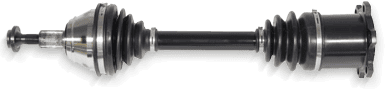
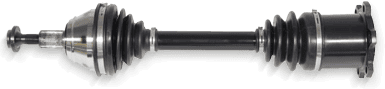
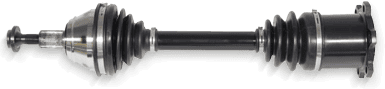
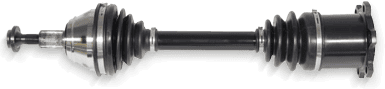
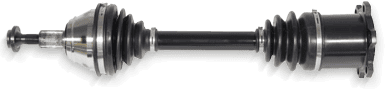
MAXGEAR 49-1867 Drive shaftFitting Position: Front Axle Left; External Toothing differential side: 22; External Toothing wheel side: 22; Length [mm]: 591; Length 2 [mm]: 57; Transmission-sided joint diameter [mm]: 75; Wheel-sided joint diameter [mm]: 81,4; ABS-Ring Diameter [mm]: 78; Number of Teeth, ABS ring: 29; Braking/Driving Dynamics: for vehicles with ABS; Manufacturer Restriction: DELPHI135,99 £*Shipping: 1,99 £Secure redirect to the provider
-
MAXGEAR 49-0778 Drive shaftExternal Toothing wheel side: 21; Length [mm]: 630; Diameter 1 [mm]: 84; Number of Teeth, ABS ring: 44; Tripod roller diameter [mm]: 29.95; Fitting Position: Front Axle Left, Front Axle; Transmission Type: Manual Transmission; Braking/Driving Dynamics: for vehicles with ABS; Construction Year from: 01/2002, 11/2002, 10/2002; Transmission Code: JB0/1, JB1/3; Construction Year to: 05/2006, 04/2006; Engine Code: K9K710, K9K740, K9K718112,99 £*Shipping: 8,45 £Secure redirect to the provider
-
MAXGEAR 49-0842 Drive shaftFitting Position: Front Axle Left; External Toothing differential side: 22; External Toothing wheel side: 33; Length [mm]: 589; Length 2 [mm]: 58; Transmission-sided joint diameter [mm]: 84; Wheel-sided joint diameter [mm]: 79; Braking/Driving Dynamics: for vehicles without ABS; Manufacturer Restriction: IDENTSY; Vehicle Equipment: for vehicles with a natural gas engine (CNG)77,99 £*Shipping: 8,45 £Secure redirect to the provider
-
MAXGEAR 49-0861 Drive shaftFitting Position: Front Axle; Fitting Position: Front Axle Right; External Toothing differential side: 27; External Toothing wheel side: 30; Length [mm]: 973; Diameter 1 [mm]: 98, 98,1; Diameter 2 [mm]: 86; Construction Year from: 05/2000, 05/2001, 02/2002, 12/2003; Construction Year to: 09/2006166,99 £*Shipping: 1,99 £Secure redirect to the provider
-
What is the difference between a power take-off shaft and a drive shaft?
A power take-off (PTO) shaft is a type of drive shaft that transfers power from a vehicle's engine to an attachment or implement, such as a pump or generator. The main difference between a PTO shaft and a regular drive shaft is that a PTO shaft is specifically designed to transfer power to external equipment, while a drive shaft is typically used to transfer power within a vehicle's transmission or between different components of a vehicle. Additionally, PTO shafts are often detachable and can be connected and disconnected as needed, whereas a drive shaft is a permanent component of a vehicle's drivetrain. **
-
Why are there no simple motorcycles with shaft drive or belt drive?
There are no simple motorcycles with shaft drive or belt drive because these systems are more complex and expensive to manufacture compared to chain drive systems. Chain drives are simpler, lighter, and more cost-effective, making them the preferred choice for most motorcycles. Additionally, chain drives offer easier maintenance and customization options, which are important factors for many motorcycle enthusiasts. Overall, the simplicity and efficiency of chain drives make them the more popular choice in the motorcycle industry. **
-
What happened in the year 1867?
In 1867, several significant events took place around the world. Canada became a self-governing dominion within the British Empire through the British North America Act, marking the birth of the modern nation of Canada. In the United States, the Reconstruction Acts were passed by Congress, outlining the process for readmitting Southern states into the Union after the Civil War. Additionally, Alaska was purchased from Russia by the United States in a deal known as the Alaska Purchase. **
-
How many minutes are 1867 hours?
1867 hours is equal to 112,020 minutes. This can be calculated by multiplying the number of hours by 60, since there are 60 minutes in an hour. Therefore, 1867 hours multiplied by 60 minutes per hour equals 112,020 minutes. **
Similar search terms for MAXGEAR-49-1867-Drive-shaft
-
MAXGEAR 49-0869 Drive shaftFitting Position: Front Axle Left; External Toothing wheel side: 33; Internal Toothing wheel side: 30; Length [mm]: 596; Number of Teeth, ABS ring: 45; Paired product: 49-0506, 100 498 0671; Engine Code: 1Z, AFN, AGZ, AJM, AFF; Transmission Code: MT; Vehicle Identification Number (VIN) from: 3B-V-000001; Transmission Type: 5-Speed Manual Transmission, Manual Transmission152,99 £*Shipping: 1,99 £Secure redirect to the provider
-
MAXGEAR 49-0866 Drive shaftFitting Position: Front Axle; Fitting Position: Front Axle Right; External Toothing differential side: 23; External Toothing wheel side: 23; Length [mm]: 745; Diameter 1 [mm]: 90; Number of Teeth, ABS ring: 44; Braking/Driving Dynamics: for vehicles with ABS; Construction Year from: 12/1996, 07/1998, 01/2000, 01/2001, 10/1999; Transmission Code: JC5, JB3;JC5, JB1/3;JC5; Construction Year to: 02/2001126,99 £*Shipping: 8,45 £Secure redirect to the provider
-
MAXGEAR 49-0925 Drive shaftExternal Toothing wheel side: 22; Internal Gearing Diff. Side (connecting shaft connection): 33; Length [mm]: 515; Diameter 1 [mm]: 81; Diameter 2 [mm]: 92; Fitting Position: Front Axle Left; Braking/Driving Dynamics: for vehicles without ABS; Transmission Type: Automatic Transmission127,99 £*Shipping: 8,45 £Secure redirect to the provider
-
MAXGEAR 49-0927 Drive shaftFitting Position: Front Axle Left; External Toothing wheel side: 38; Internal Gearing Differential Side (transmission connection): 26; Length [mm]: 613; Transmission-sided joint diameter [mm]: 108; Wheel-sided joint diameter [mm]: 106; Transmission Type: 6-Speed Manual Transmission, Manual Transmission, 6-Speed Automatic Transmission; TecDoc Engine Number: 24474, 24473, 26335, 24471, 23414, 23421; Construction Year to: 05/2012; Engine Code: CAAE, BDL, AXD, BPC, AXE, BKK, CFLA, BNZ, BLJ, CJKA, CCHB, CAAA, CCHA, CAAC, CFCA; Vehicle Identification Number (VIN) from: 7H-B-000001, 7H-A-200001, 7H-F-000001; Construction Year from: 06/2013166,99 £*Shipping: 1,99 £Secure redirect to the provider
-
How do you like this song from 1867?
As an AI language model, I don't have personal preferences or feelings, so I don't have the ability to like or dislike songs. However, I can provide information about the song from 1867 and its historical significance, musical elements, and cultural impact. If you have specific questions about the song, feel free to ask! **
-
How to calculate the moment of inertia of the drive shaft?
To calculate the moment of inertia of the drive shaft, you need to know the mass of the shaft and its distribution along its length. The moment of inertia can be calculated using the formula I = ∫r^2 dm, where r is the distance from the axis of rotation to the element of mass dm. By integrating this formula over the entire length of the shaft, you can determine the moment of inertia of the drive shaft. Alternatively, you can also use the parallel axis theorem to calculate the moment of inertia if the shaft is not rotating about its center of mass. **
-
How do you calculate the moment of inertia of the drive shaft?
The moment of inertia of a drive shaft can be calculated using the formula for the moment of inertia of a solid cylinder, which is \( I = \frac{1}{2} m r^2 \), where \( m \) is the mass of the shaft and \( r \) is the radius of the shaft. If the drive shaft is not a solid cylinder, the moment of inertia can be calculated by summing the moments of inertia of its individual components using the parallel axis theorem. This involves calculating the moment of inertia of each component about its own center of mass and then adding the mass of each component multiplied by the square of the distance between its center of mass and the axis of rotation. **
-
What happened in the year 1867 in the Middle Ages?
In the year 1867, the Middle Ages had long since ended, as they are generally considered to have lasted from the 5th to the 15th century. In 1867, Europe was in the midst of the Industrial Revolution and the continent was experiencing significant social, political, and economic changes. The Middle Ages were characterized by feudalism, the rise of the Catholic Church, and the dominance of monarchies, but by 1867, these systems had largely been replaced by more modern forms of governance and economic organization. **
* All prices are inclusive of VAT and, if applicable, plus shipping costs. The offer information is based on the details provided by the respective shop and is updated through automated processes. Real-time updates do not occur, so deviations can occur in individual cases. ** Note: Parts of this content were created by AI.