Buy fullyfashionednylons.eu ?
We are moving the project
fullyfashionednylons.eu .
Are you interested in purchasing the domain
fullyfashionednylons.eu ?
domain@kv-gmbh.de · 0541-91531010
Buy fullyfashionednylons.eu ?
Why is it called Homo sapiens sapiens, why twice sapiens?
The term "Homo sapiens sapiens" is used to distinguish modern humans from other species of the Homo genus. The double use of "sapiens" is to emphasize the unique cognitive abilities and intelligence that distinguish modern humans from earlier hominid species. It signifies that Homo sapiens have a higher level of wisdom and knowledge compared to other species, highlighting our advanced cognitive capabilities. **
Why is it called Homo sapiens sapiens, so why twice sapiens?
The term Homo sapiens sapiens is used to distinguish modern humans from other species within the Homo genus. The double use of sapiens, meaning "wise" in Latin, emphasizes the advanced cognitive abilities and intelligence that are characteristic of our species. This naming convention highlights the unique intellectual and behavioral traits that set Homo sapiens sapiens apart from our evolutionary ancestors and other hominid species. **


Similar search terms for Sapiens-A-Graphic-History
Top-Angebote
Products related to Sapiens-A-Graphic-History:
-
Fern Press Sapiens A Graphic History Volume 3: The Masters of History - Non Fiction - Graphic History SeriesTitle:. Sapiens: A Graphic History Volume 3: The Masters of History Overview:. Delve into the third instalment of the acclaimed Sapiens: A Graphic History, where Yuval Noah Harari’s sweeping ideas meet vibrant illustration, making big-history concepts approachable, memorable, and utterly engaging. In Volume 3, The Masters of History, the narrative zooms out to ask: what actually drives the arc of civilizations—the engine of empire, the lure of money, or the pull of belief—and could there be a hidden force even stronger? Witty, insightful, and provocatively visual, this volume translates Harari’s non-fiction blockbuster into a graphic format that readers can skim, savor, and debate. The creators—Harari alongside David Vandermeulen and Daniel Casanave—employ a playful “master of history” game-show framework to personify abstract forces, turning centuries of complex events into lively conversations, crisp panels, and clear diagrams. It’s not mere entertainment; it’s a rigorous, thought-provoking synthesis designed for curious minds who want to understand how the world became the way it is. Accessible to newcomers and deeply rewarding for long-time readers, this volume invites discussion, reflection, and a fresh appreciation of human history. This is non-fiction rewritten for the graphic age, perfect for readers who want the clarity of a guidebook and the imagination of a comic. What Makes This Book Stand Out:. What sets Volume 3 apart is the way it blends Harari’s provocative historical theses with Vandermeulen’s storytelling instincts and Casanave’s expressive artwork. The game-show conceit makes abstract forces tangible—empires, economies, religions, and ideas—so you can see how they pull, push, and occasionally derail the course of history. The panels balance humor with rigor, offering bite-sized insights without sacrificing depth. The graphic medium amplifies big ideas: economic systems are shown as living threads; religious movements become character-driven plots; political power unfolds in stylized sequences. The result is a readable, visually stimulating narrative that respects the reader’s intelligence while making complex history feel immediate and relevant. It’s the kind of book that invites rereading, diagram-building, and discussion—ideal for study, gifting, or personal curiosity. Who This Book Is Perfect For:. This volume speaks to readers who love grand-scale history presented with accessible clarity: history buffs who crave fresh angles, graphic-novel enthusiasts seeking substantive nonfiction, and students or teachers looking for a compelling classroom companion. It’s equally suited to BookTok and book-club conversations where ideas spark debate. Fans of Harari’s original Sapiens will appreciate the graphic translation, while newcomers can enjoy a vivid, self-contained entry point into civilization’s driving forces. Whether you’re assembling a personal library, seeking a thought-provoking gift for a curious mind, or hunting for a...22,00 £*Shipping: 2,99 £Secure redirect to the provider
-
Yuval Noah Harari Collection 2 Books Set Sapiens A Graphic History Birth of HumaDescription:. Condition: BRAND NEW. Format: Hardcover. Sapiens A Graphic History, Volume 1: The Birth of Humankind (Sapiens, 1). In this first volume of the adaptation of his ground-breaking book,. renowned historian Yuval Harari tells the story of humankind's. creation and evolution, exploring the ways in which biology and. history have defined us and enhanced our understanding of what it. means to be "human". From examining the role evolving humans have. played in the global ecosystem to charting the rise of empires,. Sapiens challenges us to reconsider accepted beliefs, connect past. developments with contemporary concerns, and view specific events. within the context of larger ideas.Featuring easy-to-understand text. covering the first part of the original edition, this adaptation of. the mind-expanding book furthers the ongoing conversation as it. introduces Harari's ideas to a wider new readership...... Sapiens A Graphic History, Volume 2: The Pillars of Civilization (Sapiens, 2). In The Pillars of Civilization, Yuval Noah Harari and his companions. including Prof. Saraswati and Dr. Fiction travel the length and. breadth of human history to investigate how the Agricultural. Revolution changed society forever. Discover how wheat took over the. world, how war, famine, disease and inequality became a part of the. human condition, and why we might only have ourselves to blame.The. origins of modern farming are told through Elizabethan tragedy, the. changing fortunes of domesticated plants and animals are tracked in. the columns of the Daily Business News, and the history of inequality. is revealed in a superhero detective story..... Title. Yuval Noah Harari Collection 2 Books Set Sapiens A Graphic History Birth of Huma. Delivery. Content. Reviews99,99 £*Shipping: 0,00 £Secure redirect to the provider
-
Yuval Noah Harari Sapiens: A Brief History of Humankind: (Patterns of Life)Description. Condition: BRAND NEW. Format: Paperback. Yuval Noah Harari’s bestselling phenomenon now in a beautifully packaged new special edition.. Planet Earth is 4.5 billion years old. In just a fraction of that time, one species among countless others has conquered it. Us. We are the most advanced and most destructive animals ever to have lived. What makes us brilliant? What makes us deadly? What makes us Sapiens?. In this bold and provocative book, Yuval Noah Harari explores who we are, how we got here and where we’re going. Sapiens is a thrilling account of humankind’s extraordinary history – from the Stone Age to the Silicon Age – and our journey from insignificant apes to rulers of the world.. 'Unbelievably good. Jaw dropping from the first word to the last' Chris Evans, BBC Radio 2. PATTERNS OF LIFE: SPECIAL EDITIONS OF GROUNDBREAKING SCIENCE BOOKS. Title. Sapiens: A Brief History of Humankind: (Patterns of Life). Delivery. Content. Reviews9,99 £*Shipping: 2,99 £Secure redirect to the provider
-
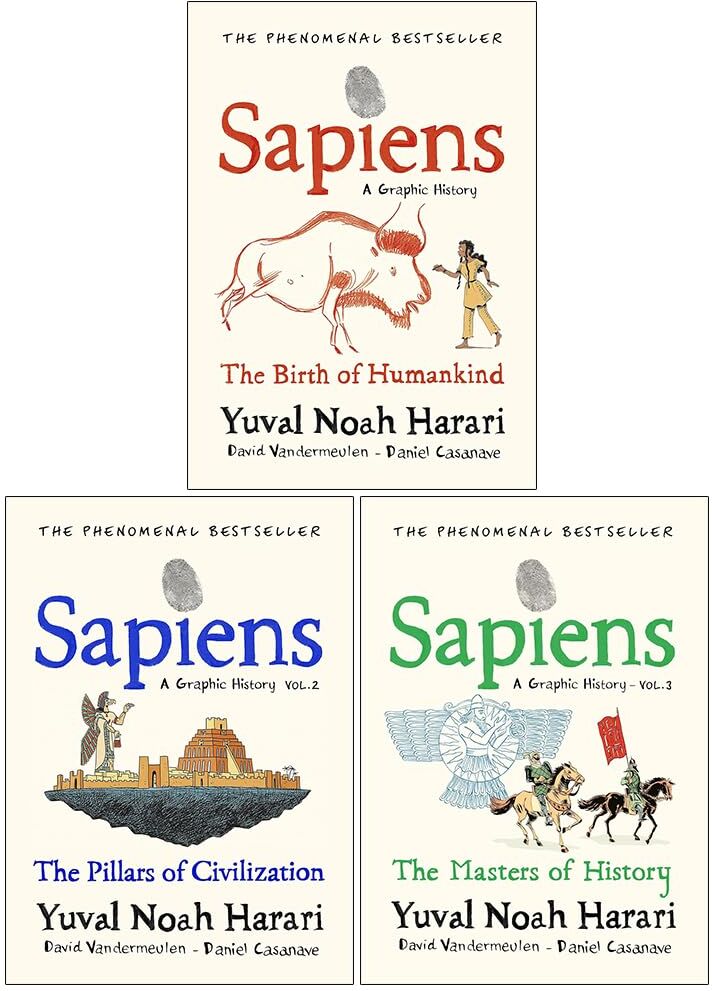
Vintage Publishing ltd Sapiens a Graphic History Volume 1-3 Books Collection Set By Yuval Noah Harari (The Birth of Humankind, The Pillars of Civilization and The Masters ofSapiens a Graphic History Volume 1-3 Books Collection Set By Yuval Noah Harari (The Birth of Humankind, The Pillars of Civilization and The Masters of History) Books Included in This Set: Sapiens A Graphic History, Volume 1 : The Birth of Humankind Sapiens A Graphic History, Volume 2 : The Pillars of Civilization Sapiens A Graphic History, Volume 3 : The Masters of History Description: Sapiens A Graphic History, Volume 1 : The Birth of Humankind One hundred thousand years ago, at least six different species of humans inhabited Earth. Yet today there is only one - homo sapiens. What happened to the others? And what may happen to us? In this first volume of the adaptation of his ground-breaking book, renowned historian Yuval Harari tells the story of humankind's creation and evolution, exploring the ways in which biology and history have defined us and enhanced our understanding of what it means to be "human". From examining the role evolving humans have played in the global ecosystem to charting the rise of empires, Sapiens challenges us to reconsider accepted beliefs, connect past developments with contemporary concerns, and view specific events within the context of larger ideas. Featuring easy-to-understand text covering the first part of the original edition, this adaptation of the mind-expanding book furthers the ongoing conversation as it introduces Harari's ideas to a wider new readership. Sapiens A Graphic History, Volume 2 : The Pillars of Civilization When nomadic Homo sapiens settled to live in one place, they started working harder and harder. But why didn't they get a better life in return? In The Pillars of Civilization, Yuval Noah Harari and his companions including Prof. Saraswati and Dr. Fiction travel the length and breadth of human history to investigate how the Agricultural Revolution changed society forever. Discover how wheat took over the world, how war, famine, disease and inequality became a part of the human condition, and why we might only have ourselves to blame. Sapiens A Graphic History, Volume 3 : The Masters of History Sometimes history seems like a laundry list of malevolent monarchs, pompous presidents and dastardly dictators. But are they really the ones in the driving seat? Sapiens: A Graphic History Volume 3 – The Masters of History takes us on a hilarious ride through the past to discover the forces that change our world, bring us together, and – just as often – tear us apart. Grab a front-row seat to the greatest show on earth and explore the rise of money, religion and empire. Join our fabulous host Heroda Tush, as she wonders: which historical superhero will display the power to make civilisations rise and fall? Will Mr Random prove that luck and circumstance prevail? Will Lady Empire convince us of the irrefutable shaping force of conquerors? Or will Clashwoman beat them all to greatness by reminding us of the endless confrontations that seem to forever plague our species?34,99 £*Shipping: 2,99 £Secure redirect to the provider


-
What is the difference between Homo sapiens and Homo sapiens sapiens?
Homo sapiens refers to modern humans, while Homo sapiens sapiens specifically refers to anatomically modern humans. The term Homo sapiens sapiens is used to distinguish modern humans from earlier subspecies of Homo sapiens. The addition of "sapiens" in Homo sapiens sapiens emphasizes the advanced cognitive abilities and anatomical features that characterize modern humans. **
-
Why is it called Homo sapiens sapiens, meaning why twice sapiens?
The term Homo sapiens sapiens is used to distinguish modern humans from other species of the Homo genus. The double use of the word "sapiens" is to emphasize the unique cognitive abilities and intelligence that distinguish modern humans from earlier hominid species. It signifies that Homo sapiens sapiens are not only wise, but also possess a higher level of wisdom and cognitive capabilities compared to other species. **
-
Were the Vikings Neanderthals or Homo sapiens sapiens?
The Vikings were Homo sapiens sapiens, the same species as modern humans. Neanderthals were a separate species of human that lived in Europe and Asia before going extinct around 40,000 years ago. The Vikings, on the other hand, were a group of people from Scandinavia who lived during the Middle Ages and were part of the same species as modern humans. **
-
What comes after Homo sapiens?
The future of human evolution is uncertain, but some scientists speculate that Homo sapiens may eventually evolve into a new species. This could be driven by factors such as genetic mutations, environmental pressures, or advancements in technology. It is possible that this new species could have different physical and cognitive abilities than Homo sapiens, potentially leading to a new era of human evolution. **


Is Homo sapiens a human or an animal?
Homo sapiens is classified as a human, specifically a member of the species Homo sapiens. While humans are biologically classified as animals within the animal kingdom, they are distinguished by their unique cognitive abilities, complex societies, and advanced communication skills. Humans have the capacity for self-awareness, abstract thinking, and moral reasoning, setting them apart from other animals. **
Is Homo neanderthalensis a subspecies of Homo sapiens?
No, Homo neanderthalensis is not a subspecies of Homo sapiens. Neanderthals and modern humans are separate species that evolved from a common ancestor. Neanderthals lived in Europe and Asia, while Homo sapiens originated in Africa. Although there is evidence of interbreeding between the two species, they are distinct and separate branches of the human evolutionary tree. **
Top-Angebote
Products related to Sapiens-A-Graphic-History:
-
Yuval Noah Harari Sapiens A Graphic History, Volume 2: The Pillars of Civilization (SAPIENS: A GRAPHIC HISTORY, 2) (HB)Description. Discover the second volume of an epic, beautifully illustrated graphic history of humankind, based on Yuval Noah Harari's multi-million copy bestselling phenomenon.. When nomadic Homo sapiens settled to live in one place, they started working harder and harder. But why didn't they get a better life in return?. In The Pillars of Civilization, Yuval Noah Harari and his companions including Prof. Saraswati and Dr. Fiction travel the length and breadth of human history to investigate how the Agricultural Revolution changed society forever. Discover how wheat took over the world, how war, famine, disease and inequality became a part of the human condition, and why we might only have ourselves to blame.. The origins of modern farming are told through Elizabethan tragedy, the changing fortunes of domesticated plants and animals are tracked in the columns of the Daily Business News, and the history of inequality is revealed in a superhero detective story.. A radical, witty and colourful retelling of the story of humankind, adapted from Yuval Noah Harari's Sapiens: A Brief History of Humankind, Volume 2 can be read as a standalone or as a follow-up to Volume 1, The Birth of Humankind.. Praise for Yuval Noah Harari's Sapiens:. 'I would recommend Sapiens to anyone who's interested in the history and future of our species.' Bill Gates. 'Interesting and provocative... It gives you a sense of how briefly we've been on this Earth' Barack Obama. 'Jaw-dropping from the first word to the last... It may be the best book I've ever read' Chris Evans. 'Contains a remarkable piece of information on almost every page and reminds us that we should be grateful to be human.' Matt Haig. 'Sweeps the cobwebs out of your brain... Radiates power and clarity, making the world strange and new' Sunday Times. 'Provocative and fascinating and opinionated...it makes the familiar seem unfamiliar. It altered how I view our species and our world.' Guardian. Title. Sapiens A Graphic History, Volume 2: The Pillars of Civilization (SAPIENS: A GRAPHIC HISTORY, 2) (HB). Delivery. Content. Reviews99,99 £*Shipping: 0,00 £Secure redirect to the provider
-
Sapiens A Graphic History, Volume 1: The Birth of Humankind (SAPIENS: A GRAPHIC HISTORY, 1) by Yuval Noah Harari (HB)Description. Condition: BRAND NEW. Format: Hardcover. The first volume of the graphic adaptation of Yuval Noah Harari's global phenomenon and smash SUNDAY TIMES #1 BESTSELLER. Featuring 256 pages of gorgeous full-colour illustrations and wrapped in a beautiful package.. One hundred thousand years ago, at least six different species of humans inhabited Earth. Yet today there is only one-homo sapiens.. What happened to the others?. And what may happen to us?. In this first volume of the adaptation of his ground-breaking book, renowned historian Yuval Harari tells the story of humankind's creation and evolution, exploring the ways in which biology and history have defined us and enhanced our understanding of what it means to be "human". From examining the role evolving humans have played in the global ecosystem to charting the rise of empires, Sapiens challenges us to reconsider accepted beliefs, connect past developments with contemporary concerns, and view specific events within the context of larger ideas.. Featuring easy-to-understand text covering the first part of the original edition, this adaptation of the mind-expanding book furthers the ongoing conversation as it introduces Harari's ideas to a wider new readership.. '[A] wonderful graphic novel... Smart, funny and dipped deep in the reality of what we as a species are...' Big Issue *Books of the Year*. Title. Sapiens A Graphic History, Volume 1: The Birth of Humankind (SAPIENS: A GRAPHIC HISTORY, 1) by Yuval Noah Harari (HB). Delivery. Content. Reviews15,99 £*Shipping: 2,99 £Secure redirect to the provider
-
Fern Press Sapiens A Graphic History Volume 3: The Masters of History - Non Fiction - Graphic History SeriesTitle:. Sapiens: A Graphic History Volume 3: The Masters of History Overview:. Delve into the third instalment of the acclaimed Sapiens: A Graphic History, where Yuval Noah Harari’s sweeping ideas meet vibrant illustration, making big-history concepts approachable, memorable, and utterly engaging. In Volume 3, The Masters of History, the narrative zooms out to ask: what actually drives the arc of civilizations—the engine of empire, the lure of money, or the pull of belief—and could there be a hidden force even stronger? Witty, insightful, and provocatively visual, this volume translates Harari’s non-fiction blockbuster into a graphic format that readers can skim, savor, and debate. The creators—Harari alongside David Vandermeulen and Daniel Casanave—employ a playful “master of history” game-show framework to personify abstract forces, turning centuries of complex events into lively conversations, crisp panels, and clear diagrams. It’s not mere entertainment; it’s a rigorous, thought-provoking synthesis designed for curious minds who want to understand how the world became the way it is. Accessible to newcomers and deeply rewarding for long-time readers, this volume invites discussion, reflection, and a fresh appreciation of human history. This is non-fiction rewritten for the graphic age, perfect for readers who want the clarity of a guidebook and the imagination of a comic. What Makes This Book Stand Out:. What sets Volume 3 apart is the way it blends Harari’s provocative historical theses with Vandermeulen’s storytelling instincts and Casanave’s expressive artwork. The game-show conceit makes abstract forces tangible—empires, economies, religions, and ideas—so you can see how they pull, push, and occasionally derail the course of history. The panels balance humor with rigor, offering bite-sized insights without sacrificing depth. The graphic medium amplifies big ideas: economic systems are shown as living threads; religious movements become character-driven plots; political power unfolds in stylized sequences. The result is a readable, visually stimulating narrative that respects the reader’s intelligence while making complex history feel immediate and relevant. It’s the kind of book that invites rereading, diagram-building, and discussion—ideal for study, gifting, or personal curiosity. Who This Book Is Perfect For:. This volume speaks to readers who love grand-scale history presented with accessible clarity: history buffs who crave fresh angles, graphic-novel enthusiasts seeking substantive nonfiction, and students or teachers looking for a compelling classroom companion. It’s equally suited to BookTok and book-club conversations where ideas spark debate. Fans of Harari’s original Sapiens will appreciate the graphic translation, while newcomers can enjoy a vivid, self-contained entry point into civilization’s driving forces. Whether you’re assembling a personal library, seeking a thought-provoking gift for a curious mind, or hunting for a...22,00 £*Shipping: 2,99 £Secure redirect to the provider
-
Yuval Noah Harari Collection 2 Books Set Sapiens A Graphic History Birth of HumaDescription:. Condition: BRAND NEW. Format: Hardcover. Sapiens A Graphic History, Volume 1: The Birth of Humankind (Sapiens, 1). In this first volume of the adaptation of his ground-breaking book,. renowned historian Yuval Harari tells the story of humankind's. creation and evolution, exploring the ways in which biology and. history have defined us and enhanced our understanding of what it. means to be "human". From examining the role evolving humans have. played in the global ecosystem to charting the rise of empires,. Sapiens challenges us to reconsider accepted beliefs, connect past. developments with contemporary concerns, and view specific events. within the context of larger ideas.Featuring easy-to-understand text. covering the first part of the original edition, this adaptation of. the mind-expanding book furthers the ongoing conversation as it. introduces Harari's ideas to a wider new readership...... Sapiens A Graphic History, Volume 2: The Pillars of Civilization (Sapiens, 2). In The Pillars of Civilization, Yuval Noah Harari and his companions. including Prof. Saraswati and Dr. Fiction travel the length and. breadth of human history to investigate how the Agricultural. Revolution changed society forever. Discover how wheat took over the. world, how war, famine, disease and inequality became a part of the. human condition, and why we might only have ourselves to blame.The. origins of modern farming are told through Elizabethan tragedy, the. changing fortunes of domesticated plants and animals are tracked in. the columns of the Daily Business News, and the history of inequality. is revealed in a superhero detective story..... Title. Yuval Noah Harari Collection 2 Books Set Sapiens A Graphic History Birth of Huma. Delivery. Content. Reviews99,99 £*Shipping: 0,00 £Secure redirect to the provider
-
Why is it called Homo sapiens sapiens, why twice sapiens?
The term "Homo sapiens sapiens" is used to distinguish modern humans from other species of the Homo genus. The double use of "sapiens" is to emphasize the unique cognitive abilities and intelligence that distinguish modern humans from earlier hominid species. It signifies that Homo sapiens have a higher level of wisdom and knowledge compared to other species, highlighting our advanced cognitive capabilities. **
-
Why is it called Homo sapiens sapiens, so why twice sapiens?
The term Homo sapiens sapiens is used to distinguish modern humans from other species within the Homo genus. The double use of sapiens, meaning "wise" in Latin, emphasizes the advanced cognitive abilities and intelligence that are characteristic of our species. This naming convention highlights the unique intellectual and behavioral traits that set Homo sapiens sapiens apart from our evolutionary ancestors and other hominid species. **
-
What is the difference between Homo sapiens and Homo sapiens sapiens?
Homo sapiens refers to modern humans, while Homo sapiens sapiens specifically refers to anatomically modern humans. The term Homo sapiens sapiens is used to distinguish modern humans from earlier subspecies of Homo sapiens. The addition of "sapiens" in Homo sapiens sapiens emphasizes the advanced cognitive abilities and anatomical features that characterize modern humans. **
-
Why is it called Homo sapiens sapiens, meaning why twice sapiens?
The term Homo sapiens sapiens is used to distinguish modern humans from other species of the Homo genus. The double use of the word "sapiens" is to emphasize the unique cognitive abilities and intelligence that distinguish modern humans from earlier hominid species. It signifies that Homo sapiens sapiens are not only wise, but also possess a higher level of wisdom and cognitive capabilities compared to other species. **
Similar search terms for Sapiens-A-Graphic-History
-
Yuval Noah Harari Sapiens: A Brief History of Humankind: (Patterns of Life)Description. Condition: BRAND NEW. Format: Paperback. Yuval Noah Harari’s bestselling phenomenon now in a beautifully packaged new special edition.. Planet Earth is 4.5 billion years old. In just a fraction of that time, one species among countless others has conquered it. Us. We are the most advanced and most destructive animals ever to have lived. What makes us brilliant? What makes us deadly? What makes us Sapiens?. In this bold and provocative book, Yuval Noah Harari explores who we are, how we got here and where we’re going. Sapiens is a thrilling account of humankind’s extraordinary history – from the Stone Age to the Silicon Age – and our journey from insignificant apes to rulers of the world.. 'Unbelievably good. Jaw dropping from the first word to the last' Chris Evans, BBC Radio 2. PATTERNS OF LIFE: SPECIAL EDITIONS OF GROUNDBREAKING SCIENCE BOOKS. Title. Sapiens: A Brief History of Humankind: (Patterns of Life). Delivery. Content. Reviews9,99 £*Shipping: 2,99 £Secure redirect to the provider
-
Vintage Publishing ltd Sapiens a Graphic History Volume 1-3 Books Collection Set By Yuval Noah Harari (The Birth of Humankind, The Pillars of Civilization and The Masters ofSapiens a Graphic History Volume 1-3 Books Collection Set By Yuval Noah Harari (The Birth of Humankind, The Pillars of Civilization and The Masters of History) Books Included in This Set: Sapiens A Graphic History, Volume 1 : The Birth of Humankind Sapiens A Graphic History, Volume 2 : The Pillars of Civilization Sapiens A Graphic History, Volume 3 : The Masters of History Description: Sapiens A Graphic History, Volume 1 : The Birth of Humankind One hundred thousand years ago, at least six different species of humans inhabited Earth. Yet today there is only one - homo sapiens. What happened to the others? And what may happen to us? In this first volume of the adaptation of his ground-breaking book, renowned historian Yuval Harari tells the story of humankind's creation and evolution, exploring the ways in which biology and history have defined us and enhanced our understanding of what it means to be "human". From examining the role evolving humans have played in the global ecosystem to charting the rise of empires, Sapiens challenges us to reconsider accepted beliefs, connect past developments with contemporary concerns, and view specific events within the context of larger ideas. Featuring easy-to-understand text covering the first part of the original edition, this adaptation of the mind-expanding book furthers the ongoing conversation as it introduces Harari's ideas to a wider new readership. Sapiens A Graphic History, Volume 2 : The Pillars of Civilization When nomadic Homo sapiens settled to live in one place, they started working harder and harder. But why didn't they get a better life in return? In The Pillars of Civilization, Yuval Noah Harari and his companions including Prof. Saraswati and Dr. Fiction travel the length and breadth of human history to investigate how the Agricultural Revolution changed society forever. Discover how wheat took over the world, how war, famine, disease and inequality became a part of the human condition, and why we might only have ourselves to blame. Sapiens A Graphic History, Volume 3 : The Masters of History Sometimes history seems like a laundry list of malevolent monarchs, pompous presidents and dastardly dictators. But are they really the ones in the driving seat? Sapiens: A Graphic History Volume 3 – The Masters of History takes us on a hilarious ride through the past to discover the forces that change our world, bring us together, and – just as often – tear us apart. Grab a front-row seat to the greatest show on earth and explore the rise of money, religion and empire. Join our fabulous host Heroda Tush, as she wonders: which historical superhero will display the power to make civilisations rise and fall? Will Mr Random prove that luck and circumstance prevail? Will Lady Empire convince us of the irrefutable shaping force of conquerors? Or will Clashwoman beat them all to greatness by reminding us of the endless confrontations that seem to forever plague our species?34,99 £*Shipping: 2,99 £Secure redirect to the provider
-
Stephen Hawking & Yuval Noah Harari Brief Answers to the Big Questions, A Brief History of Time, Sapiens - 3-Book Collection - Non Fiction - PaperbackTitles in This Set:. Brief Answers to the Big Questions. A Brief History of Time. Sapiens Condition: BRAND NEW. Format: Paperback Overview:. Three landmark titles that together map humanity’s greatest questions: the nature of the universe, the story of our own species, and the search for meaning within both science and history. This paperback collection brings Stephen Hawking’s lucid explorations of space, time, and existence into a single, portable reading experience, alongside Yuval Noah Harari’s sweeping travelogue through the milestones that shaped human societies. Brief Answers to the Big Questions offers clear, accessible responses to questions we all ask about reality, while A Brief History of Time invites readers to glimpse the cosmos from the Big Bang to the fate of black holes. Sapiens surveys how biology and culture collided to produce modern civilization. Perfect for curious minds seeking a cohesive, thought-provoking reading journey in one handsome, value-driven paperback set. What Makes This Collection Special:. This trio bundles science and history into a powerful, cross-generational reading experience. Hawking’s concise yet profound explanations serve as an accessible entry point to complex topics, while Harari’s narrative weaves a grand arc from early humans to the present day. Together, they offer a complete intellectual itinerary: questions about existence, civilization, and progress. The collection is not only a convenient way to own three influential books, but also a gift-ready, collector-worthy set that encourages sustained reading, reading aloud, and discussion. With consistent paperback formatting, it creates a cohesive reading journey for book clubs, lifelong learners, and gift buyers seeking a well-rounded knowledge map. Books Included in This Collection:. Brief Answers to the Big Questions. A concise, accessible compendium of Hawking’s reflections on topics ranging from cosmology to artificial intelligence. This title distills years of theoretical insight into clear answers, inviting readers to contemplate the universe and our place within it without requiring advanced physics background. It’s ideal for curious readers who enjoy big ideas presented with warmth, clarity, and a sense of wonder. A thoughtful bridge between popular science and philosophical inquiry, it pairs perfectly with more expansive cosmic reading or a deeper dive into Hawking’s broader work. A Brief History of Time. A landmark introduction to cosmology and the laws that govern the universe. Hawking guides readers through complex concepts—space, time, black holes, the origins of the cosmos—using accessible language and engaging analogies. The book invites lifelong learners to reflect on how scientific progress has reshaped our sense of reality, while providing enough depth to satisfy curious minds who want to grasp the big questions without getting lost in technical detail. It remains a foundational keeper for non fiction readers seeking authoritative...99,99 £*Shipping: 0,00 £Secure redirect to the provider
-
Were the Vikings Neanderthals or Homo sapiens sapiens?
The Vikings were Homo sapiens sapiens, the same species as modern humans. Neanderthals were a separate species of human that lived in Europe and Asia before going extinct around 40,000 years ago. The Vikings, on the other hand, were a group of people from Scandinavia who lived during the Middle Ages and were part of the same species as modern humans. **
-
What comes after Homo sapiens?
The future of human evolution is uncertain, but some scientists speculate that Homo sapiens may eventually evolve into a new species. This could be driven by factors such as genetic mutations, environmental pressures, or advancements in technology. It is possible that this new species could have different physical and cognitive abilities than Homo sapiens, potentially leading to a new era of human evolution. **
-
Is Homo sapiens a human or an animal?
Homo sapiens is classified as a human, specifically a member of the species Homo sapiens. While humans are biologically classified as animals within the animal kingdom, they are distinguished by their unique cognitive abilities, complex societies, and advanced communication skills. Humans have the capacity for self-awareness, abstract thinking, and moral reasoning, setting them apart from other animals. **
-
Is Homo neanderthalensis a subspecies of Homo sapiens?
No, Homo neanderthalensis is not a subspecies of Homo sapiens. Neanderthals and modern humans are separate species that evolved from a common ancestor. Neanderthals lived in Europe and Asia, while Homo sapiens originated in Africa. Although there is evidence of interbreeding between the two species, they are distinct and separate branches of the human evolutionary tree. **
* All prices are inclusive of VAT and, if applicable, plus shipping costs. The offer information is based on the details provided by the respective shop and is updated through automated processes. Real-time updates do not occur, so deviations can occur in individual cases. ** Note: Parts of this content were created by AI.